
Electroplating Learn.
Everything you need to know about electroplating but were afraid to ask. We break down complex coating processes into plain English so you can talk intelligently with suppliers, write better specifications, and avoid expensive mistakes. Think of this as electroplating school without the boring lectures or pop quizzes. Real knowledge from 30 years in the tanks.
Rack Plating
ProcessesWhat Is It
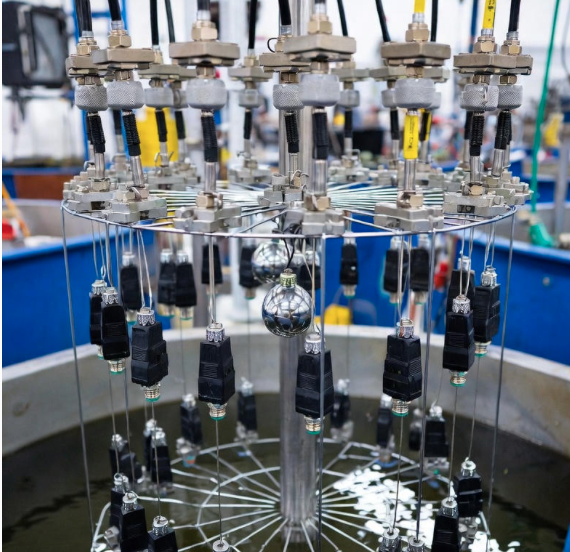
Individual Processing: Parts hang on fixtures for precision plating control.
Rack plating hangs individual parts or small batches on conductive fixtures called racks. Think of it like hanging Christmas ornaments on a wire frame, except the frame conducts electricity to each part. Parts stay fixed in position throughout processing allowing precise current distribution and coating thickness control. You see where current flows, adjust racking angles, control everything. Rack plating handles large parts, complex geometries, and applications requiring tight thickness tolerances. Most aerospace, automotive, and high-value components get rack plated because you need that level of control.
Rack Design
Good rack design makes or breaks plating quality. Racks use spring clips, hooks, or clamps providing solid electrical contact to parts. Contact points must be clean, tight, and positioned in non-critical areas customers won't see. Rack geometry affects current distribution. Parts facing anodes get more current than shielded areas. Spacing prevents parts from touching or shielding each other. Racks need regular maintenance stripping accumulated plating, replacing worn springs, and ensuring good conductivity. Bad racks create uneven thickness, poor contacts, and rejected parts regardless of perfect chemistry.
Spacing
Parts need clearance preventing contact and allowing solution circulation
Contact
Solid electrical connection required at non-critical locations
Maintenance
Regular stripping and repair maintains conductivity and performance
Process Flow
Operators load parts onto racks, then move racks through processing tanks either manually with hoists or automatically with conveyors. Each tank performs a specific step: degrease, rinse, pickle, rinse, activate, plate, rinse, passivate, rinse, dry. Dwell times vary from seconds to hours depending on coating type and thickness required. Manual lines offer flexibility changing sequences for different parts. Automatic lines provide consistency but less adaptability. Either way, rack plating gives you control over every variable affecting final coating quality.
Tank Sequencing
Order matters tremendously. Skipping rinse steps contaminates downstream tanks. Reversing cleaning and pickling gives terrible results. Smart shops mark racks preventing accidental sequence changes. Operators follow travelers specifying exact tank sequence and times for each part number.
Advantages
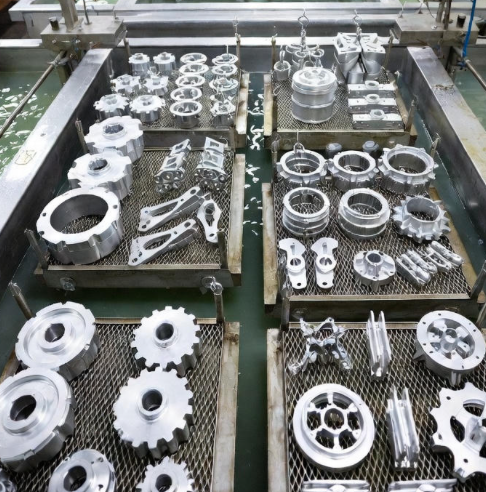
Quality Control: Individual part handling enables tight process control.
Rack plating excels at precision work. You control exactly where current flows optimizing thickness distribution. Complex geometries get proper orientation toward anodes. Large parts that won't fit barrels plate easily on racks. Low-volume custom work doesn't require special tooling. Visual inspection happens throughout processing catching problems immediately. Parts don't damage each other through tumbling contact. When aerospace specs demand thickness within 50 microinches at designated locations, rack plating delivers that control. Barrel plating can't touch this level of precision.
Disadvantages
Labor costs kill you with rack plating. Operators manually load and unload every part. Complex parts need custom rack design and fabrication. Throughput stays low compared to barrel operations. Contact points leave unplated marks requiring touch-up or living with bare spots. Racks need constant maintenance stripping and repair adding hidden costs. Small parts make no economic sense on racks when barrels process thousands per hour. You pay premium prices for rack plating precision because labor dominates the cost structure.
| Factor | Rack Plating | Barrel Plating |
|---|---|---|
| Labor Cost | High - manual handling | Low - bulk processing |
| Precision | Excellent control | Limited control |
| Part Size | Any size works | Small parts only |
| Throughput | Low volume | High volume |
Best Applications
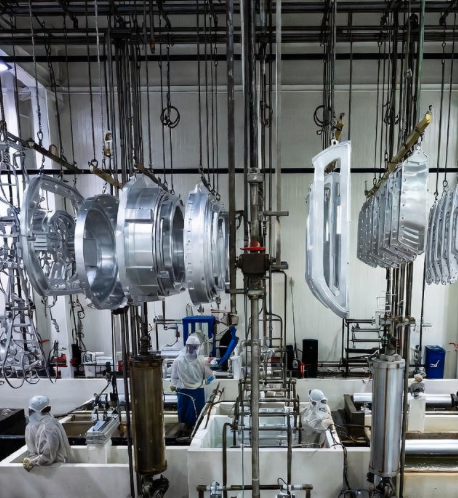
Ideal Uses: Critical applications demanding precision and control.
Aerospace components requiring tight thickness specs get rack plated exclusively. Decorative chrome on automotive trim needs perfect appearance only racks deliver. Medical instruments with complex geometries require proper orientation during plating. Large hydraulic cylinders won't fit barrels making rack plating mandatory. Prototype work and low-volume custom parts justify rack labor costs through flexibility. Any application where coating quality matters more than cost automatically points toward rack plating. When rejections cost more than labor, you rack plate everything.
Tips
Orient parts toward anodes for even current distribution. Position contact points in non-critical areas customers won't inspect. Space parts preventing mutual shielding or touching. Maintain racks religiously stripping buildup every few cycles. Test rack conductivity with ohmmeters catching poor contacts before plating. Use insulating tape or plastisol coating on rack areas you don't want plated. Calculate loading based on surface area affecting current requirements. Watch for hydrogen embrittlement on high-strength steels requiring baking after plating. Good racking technique separates excellent plating shops from mediocre operations.
Cost Estimation
Figure 3 to 5 minutes labor per part for loading and unloading. Add plating time, prep time, and rack amortization. Small quantities get expensive fast.
Quality Checks
Inspect parts immediately after plating while still on racks. Easier catching problems before unloading. Visual defects show instantly under good lighting.
Rack Plating Basics
- •Parts hang individually on conductive fixtures providing precise current distribution control
- •Good rack design ensures solid electrical contact at non-critical locations with proper part spacing
- •High labor costs offset by precision control, part size flexibility, and coating quality
- •Best for aerospace components, decorative finishes, and complex geometries requiring tight tolerances
- •Regular rack maintenance and proper part orientation critical for consistent results